
Merit is Not Neutral
The Great Meritocracy Myth: Why Diversity, Equity, and Inclusion Was Always About Merit!

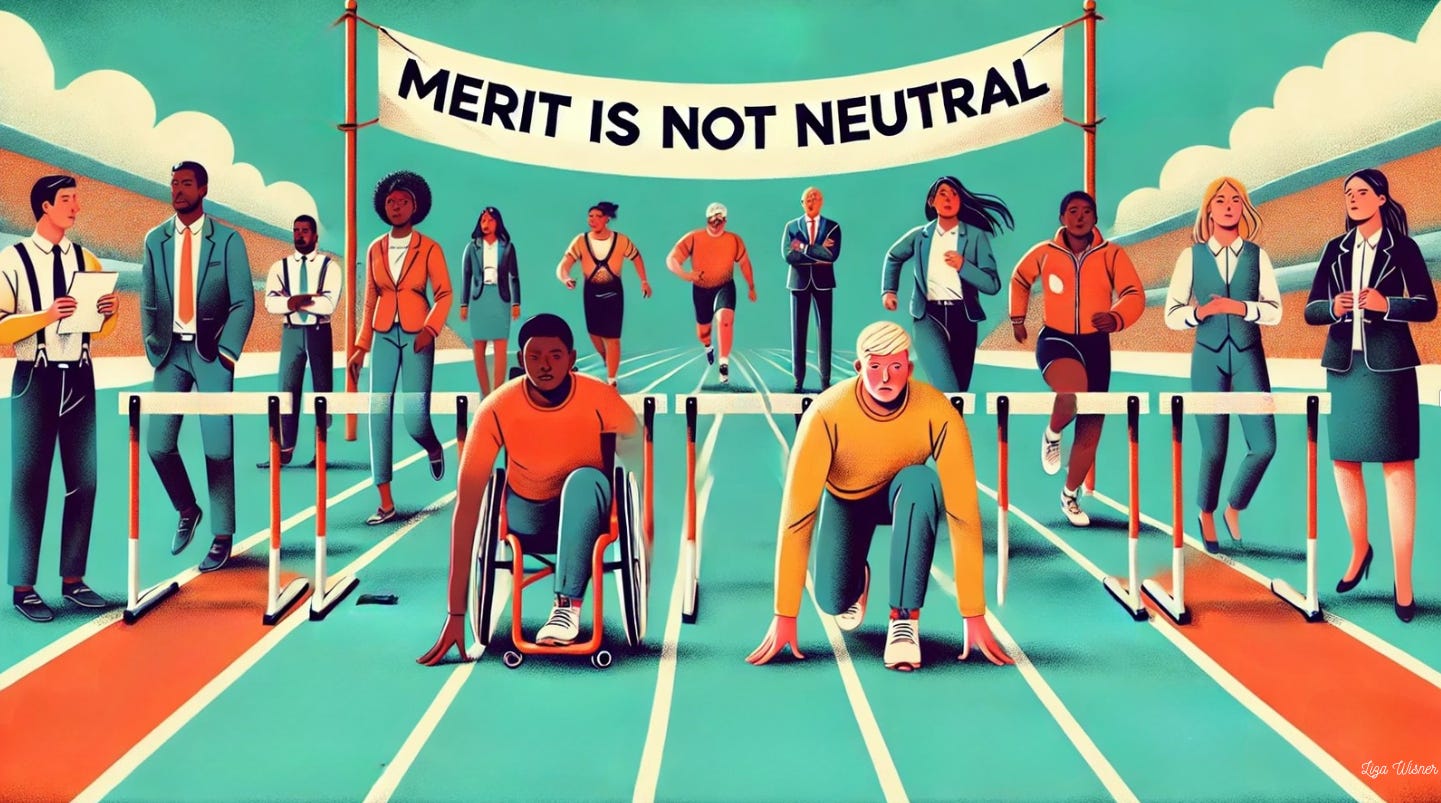
You have done everything right.
For years, you had played by the rules. Hit every target, exceeded every expectation, stayed late, and showed up early. Your inbox was full of praise. Every quarterly review is glowing. Every major project lands successfully. Every metric, surpassed. You haven’t just been good at your job - you have been exceptional.
And yet, every time you bring up the question of advancement, the answer was the same:
"You're doing an amazing job! We're so happy with you, and we’ll review your career advancement soon."
"We’re working on a new career plan for the team, and we’ll let you know as soon as possible what we plan to do."
“Oh, I just want you to know that an announcement is coming soon on your career here.”
The first time, it sounded promising. The second time, reassuring. By the third and fourth time, now you sadly know what it really means: Wait.
Months passed. A year. Then two. Promotions came and went, but never for you. It was always someone else.
The reality sinks deep, leaving behind the unmistakable taste of a truth you have always suspected but never wanted to name:
Merit had never been neutral.
The myth of the workplace meritocracy and the belief that if you work hard enough, if you are smart enough, if you are good enough, you will rise, is just that. A myth.
You are not alone. This is the story of countless professionals in countless industries. The unspoken reality is that success had never been about skill alone. It had never been about performance alone. It had never been about merit alone.
🔹 This isn’t about effort.
🔹 It’s not about talent.
🔹 This is about who is liked. Who gets chosen.
🔹 It’s about who is allowed to be seen as “leadership material.”
🔹 And who gets left waiting.
Maybe you are done waiting. If you are, let’s get real! Let’s talk about this fact, this truth in workplaces all over the world.
The Illusion of Advancement Based on Merit
I’ve spoken with leaders across industries, at all levels, about what success looks like. And let me tell you, I got a dozen different answers.
Yet, people are now insisting that DEI is the problem, when the real problem is that the measuring stick of success is broken.
Think about it like this:
Imagine two runners at the starting line. But one gets a 10-second head start.
The first runner gets a clear track, no obstacles.
The second runner? They have to jump hurdles, dodge roadblocks, and still somehow finish at the same time just to be considered equal.
And when the first runner wins, the judges say:
"See? They were just faster. That’s meritocracy."
But was it really?
In addition, the data is clear: meritocracy is a myth when the structures measuring merit are flawed.
Harvard Business Review found that workplaces claiming to be “meritocratic” often allow bias to flourish because decision-makers believe they are being objective while unconsciously favoring people who look and think like them.
MIT Sloan Management Review reports that when promotions hinge on undefined qualities like "fit" or "potential," they overwhelmingly benefit those who already resemble existing leadership. The researcher Emilio J. Castilla found that even when companies establish merit-based reward systems, unintentional demographic biases persist. The point is that organizations that pride themselves on being meritocratic may actually be more prone to unfair decision-making, as the belief in their own ‘fairness’ is their perception and prevents deeper scrutiny of inequitable outcomes.
The False Divide: DEI vs. Merit
The way some people talk about it, you’d think DEI and merit are opposites. As if hiring or promoting with diversity in mind means lowering the bar instead of raising it.
But here’s the truth: Diversity, Equity, and Inclusion was always about merit.
It was about making sure talent wasn’t overlooked.
It was about ensuring the best ideas weren’t ignored just because they came from someone outside the “inner circle.”
It was about rewarding real contributions - not just who looked or sounded like leadership.
The problem was never that DEI ignored merit. The problem was that merit was never being measured fairly in the first place.
Success Isn’t About Performance - It’s About Visibility
If meritocracy were truly real. If success were only about performance, then we wouldn’t need DEI at all. The best person would naturally rise to the top.
But the truth is:
🚨 Merit is only as fair as the system measuring it.
🚨 Unfair decisions thrives when success criteria are ambiguous.
🚨 Impact only counts when leadership decides it matters.
So when companies say, “We promote based on merit.”
When they claim, “We reward based on impact.”
But the rules keep shifting - what exactly is being rewarded?
Consider a neurodivergent employee who delivers innovative solutions but struggles with traditional networking expectations.
Or a professional with a disability whose measurable impact is undeniable, yet leadership hesitates because they don’t fit outdated ideas of "executive presence."
Or, more broadly, what happens when "merit" is assessed using intangible factors like “fit” or “potential”, criteria that conveniently favor those who already resemble the decision-makers?
This is why meritocracy without equity is just an illusion.
DEI didn’t add something new to the equation that made some people get unfair opportunities. It revealed what was already broken. That talent wasn’t always being recognized because the measuring stick was flawed.
The Moving Goalposts of Success: What Needs to Change
If the rules for success are constantly shifting…
If impact is never clearly defined…
If leadership is making decisions based on their comfort of who they think deserves rather than capability…
Then what exactly is being rewarded?
🚨 Merit is only as fair as the system measuring it.
🚨 Success should not depend on who leadership feels “comfortable” promoting.
🚨 Impact must be measured consistently - not just when it benefits the decision maker.
If You Believe in Merit, You Believe in DEI
Those who argue that we should “go back” to a pure merit-based system are missing the point. There was never a time when success was purely about merit.
DEI was never about lowering standards. It was about holding companies accountable to the standards they claimed to have.
If you truly believe in:
✅ Rewarding hard work
✅ Recognizing the most qualified talent
✅ Ensuring the best people rise to the top
Then congratulations! You already believe in DEI.
You just stopped calling it that.
Leadership - It’s Time to Be Honest
If your organization truly values merit:
✅ Define and standardize promotion criteria. No more vague metrics. Employees should know exactly what it takes to advance.
✅ Audit who gets promoted and why. Leadership must track workloads, impact patterns, and address disparities. Transparency builds trust.
✅ End the "culture fit" excuse. Hiring and promotions should be based on measurable and transparent impact, not comfort.
I can't even count the number of conversations I've had with employees who love their work but feel invisible when it comes to advancement. They’ve put in the effort, delivered results, and exceeded expectations, yet the promotions go to someone else.
If performance isn’t the deciding factor in success, then let’s stop pretending merit ever has anything to do with it.
What You Can Do Right Now!
We’ve called on leadership to step up, but you don’t have to wait for leadership to fix this. Here’s what YOU can do, starting today:
✅ Advocate for Yourself, Loudly and Clearly: If you’ve been told to "wait your turn", ask direct questions:
“What specific criteria are being used for promotions?”
“What measurable impact do I need to demonstrate to advance?”
“Who is currently advocating for my growth?”
If leadership struggles to give clear answers, that’s the problem. Demand transparency.
✅ Be the Sponsor You Wish You Had: Sponsorship (not just mentorship) changes careers. It’s not enough to give advice. Open doors for others. Recommend colleagues for leadership opportunities, publicly acknowledge their contributions, and bring their names into the rooms they’re excluded from.
✅ Challenge the “Culture Fit” Excuse: The next time you hear “They just weren’t the right fit”, ask:
“Fit for what? Can you define the skills gap?”
“If they met all the requirements, what exactly was missing?”
“What steps can we take to ensure talent isn’t overlooked due to vague criteria?”
These small acts of resistance force clarity and accountability and that’s where real change starts.
Because if we all stop accepting the silence, the system has no choice but to listen.
MERIT. IS. NOT. NEUTRAL.